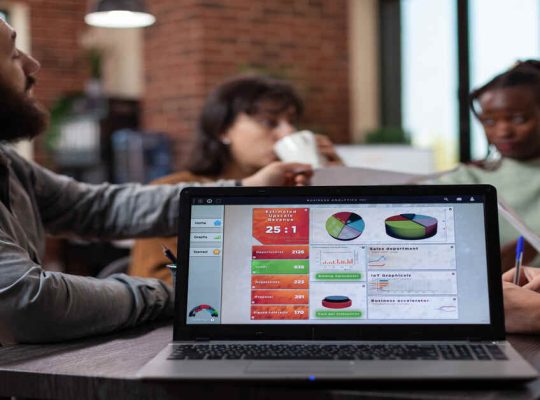


Technology trends are crucial in determining the future of business as we move into a highly digitized 2026. Emerging innovations in Artificial Intelligence and Blockchain are reshaping industries and changing how companies engage with their customers. By being vibrant and receptive to these technical shifts, organizations can generate value and improve experiences in a competitive environment.
The emergence of Artificial Intelligence and Machine learning
Transforming Decision-Making
Machine Learning (ML) and Artificial Intelligence (AI) are the most promising technologies in the sphere of business revolution. Such technologies can help organizations make well-informed decisions within a short period of time due to the analysis of large volumes of data.
Real-Life Application: There are companies such as Amazon that use AI algorithms to suggest products to their customers depending on their preferences and browsing history. This customization is useful in boosting user experience and in making sales.
Automation of Routine Tasks
The automation of repetitive work is another aspect of AI and ML that ensures that employees are not overwhelmed with monotonous work but are able to concentrate on more important projects. An example is the use of chatbots with AI that will be able to address customer questions 24/7, thus providing immediate assistance and enhancing satisfaction among customers.
The Development of Remote working
Collaborative Platforms
The coronavirus pandemic brought the popularity of working remotely at an even faster pace, and it is not going away. By 2025, companies will turn to collaborative software such as Microsoft Teams and Slack as more effective tools to promote communication and cooperation among workers who will be working remotely.
Professional Analysis: According to a report by Gartner, remote work will become the norm with 70 percent of the working population reporting at least once a week in 2025. Competitors have to invest in equipment that will facilitate remote work to remain productive.
Virtual Reality and Augmented Reality
New technologies VR and AR are becoming part of the remote work environment. These will help in immersive conferences and training sessions where employees are able to engage in virtual space even though they may be located in different places.
Evidence-Based Information: VR Training is potentially useful in employee development, as a study conducted by PwC suggested that VR training can be the most effective training method, with the retention rates increasing up to 75 percent if compared to the traditional one.
The IoT Internet of Things Expansion
Enhanced Data Collection
Internet of Things (IoT) can be defined as the network of interacting and sharing devices. The IoT will transform the present business operations by 2025 through offering insights into valuable information gathered in real-time.
Real-Life Case: IoT devices enable retail giants such as Walmart to check the inventory by the hour, which makes managing the supply chain more efficient. This technology minimizes wastage and makes the shelves receive the appropriate products.
Smart Manufacturing
IoT devices are also used in manufacturing and can predict maintenance, therefore, saving a lot of downtime and maintenance expenses. Sensors are able to check on the equipment and their health this will warn managers in case of a problem before it escalates.
The Emergence of Blockchain Technology
Increased Security and Transparency
Blockchain technology is becoming popular in different sectors due to the nature of the technology to offer secure and transparent transactions. The future of blockchain in businesses in 2025 will be more business-oriented as more enterprises will use it to improve security and instill confidence in their clients.
Professional opinion: A report by Deloitte revealed that 40 percent of organizations are planning on using blockchain technology to manage their supply chain because it offers a secure and immutable transaction record.
Decentralized Finance (DeFi)
Another notable trend is the emergence of the DeFi, which allows businesses and individuals to access financial services without the need to use traditional intermediaries. Blockchain-based smart contracts enable visionary purchases and decrease expenses, as well as enhance efficiency.
Emphasis on Cybersecurity
Protecting Digital Assets
With the increasing digitization of businesses, cybersecurity risks are increasing. By 2025, companies will be required to emphasize on cybersecurity actions to safeguard sensitive data and ensure that customers remain loyal.
Statistics: Cybersecurity Ventures estimates that cybercriminals are likely to rob businesses more than 10 trillion dollars a year by 2025. The sustainable operation will need to invest in a strong cybersecurity infrastructure.
A Culture of Security
Another aspect that will be required by the businesses is the development of security awareness among the employees. Educational programs on threats and best practices in data protection will become more essential in the case of training of staff.
The Necessity of Sustainability
Greener Business Practices
In 2025, sustainability will be an important business decision maker. Consumers are increasingly becoming mindful of environmental concerns and those companies which embrace environmentally sustainable practices will enjoy competitive advantage.
Real-Life Case: The companies such as Tesla are on a forefront promoting renewable energy and sustainable movement. Consequently, they appeal to green consumers and investors.
Innovative Solutions
The new technology like AI and IoT can assist companies in monitoring and mitigating their carbon footprints. As an example, smart energy management systems have the ability to optimize the use of energy on-command, which can lead to sustainability objectives.
Conclusion
With the imminent drive toward 2025, the company should adopt the new trends in technology with a lot of dynamism and initiative. In a rapidly competitive business environment, the future of business is not merely about staying at par with the current technological trends, but about utilizing these trends to generate value, improve customer experiences, and spur growth.It is important to remember that the future of business is not only about its ability to abide by the latest trends in technology; it is also about using these trends to create value, facilitate customer experiences, and drive growth. Businesses can succeed in the dynamic digital economy by keeping up with these trends.