

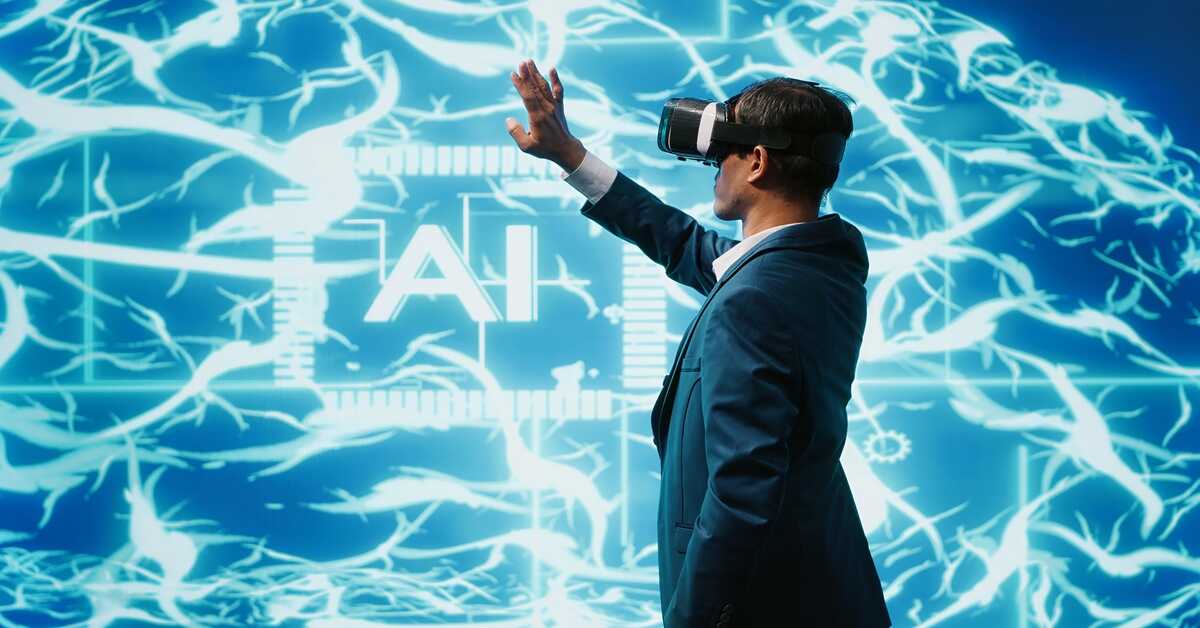
AI-driven technologies are no longer a dream but the force behind the most radical innovations of our age. In 2026, these systems are transforming healthcare, education, and sustainable energy, making our daily interactions smarter and more intuitive. By understanding these breakthroughs, you can prepare yourself for a future where technology and humanity evolve together in harmony.
Why is the year 2026 a critical year in AI though? It is the confluence of technologies that are becoming more mature, access, and rising demand for intelligent systems which address real-world issues. This paper discusses the most innovative AI-driven technologies that will dominate the technologies trends in 2026.
Why AI Will Be the Tech Trend of 2026
No wonder, AI is leading the technology revolution. A report by McKinsey Global Institute reveals that AI will bring about 13 trillion to the world economy by 2030, and by 2026, the growth will be significantly faster.
The capability of AI to process large volumes of data, learn and make real time decisions has seen it become one of the most important technologies in innovation. AI is being used by businesses, governments, and individuals to enhance efficiency and minimize costs and develop personalized experiences.
Artificial Intelligence Solutions to Revolutionize Industry
Now it is time to explore some of the most powerful AI-based innovations that are shaping the technological future in 2026.
1. Artificial Intelligence: The Revolution in Creativity
ChatGPT, DALL*E, and Stable Diffusion are already being discussed in the news, but in 2026, the technology of generative AI will be used to take creativity to a new level. These are used in industries to make anything out of marketing materials to hyper-realistic virtual worlds.
Real-Life Example
AI has been adopted by the gaming industry to create dynamic worlds. An example is that AI algorithms are currently designing individual, player-centric storyline, which makes the games more interesting and unique.
Expert Insight
According to Dr. Elena Martinez, who is an AI researcher, generative AI is not merely a content-creating tool, but rather it enhances human creativity. In the year 2026, we will be witnessing AI tools in the role of co-creators, rather than assistants.
2. Artificial Intelligence in Healthcare: Precise Medicine and Diagnosis
AI is revolutionizing healthcare by making the process of diagnosing a patient and the treatment plan more precise and quicker. Machine learning applications can process medical data to reveal patterns that human beings would fail to see and as such, more diseases are detected earlier.
Breakthrough Example
It is noted that in 2025, AI-based tools will be able to predict diseases such as Alzheimer years before the symptoms are noticeable. Companies such as DeepMind and Tempus are using AI to analyze genetic data, imaging, and history of patients in order to develop custom healthcare.
Research Insight
An analysis of AI-based diagnostic tools by The Lancet showed that the patient outcomes were better, with the misdiagnosis rate dropping by 40 percent, which saved the healthcare sector billions of dollars.
3. Self-Driving Transportation: Artificial Intelligence in the Road
Autonomous drones used to deliver and self-driving cars are not an invention anymore, but a reality. Google-driven systems combine the latest computer vision, real time mapping, and predictive analytics settings to steer clear of tricky locales.
Real-Life Progress
Tesla and Waymo are in the forefront and fully autonomous vehicles have managed to cover millions of miles successfully. Urban last-mile delivery with AI-driven drones is transforming the business, making it cheaper and less damaging to the environment.
Pro Tip
With AI in the transport sector expanding, companies must take note of how the new technology can improve logistics and lessen operation wastage.
4. AI in Education: Intelligent Learning
AI has brought a phenomenal change in the education sector. Adaptive learning tools attempt to study the strengths, weaknesses, and learning preferences of each student and provide personalized content and suggestions, using AI.
Example
Artificial intelligence such as Duolingo AI and adaptive learning algorithms on coursera are assisting students in learning more quickly because the lesson plan is customized to their needs.
Expert Quote
It is the democratisation of education by AI. Prof. Andrew Kim, an education technology expert says that it provides students, both where they are and with what they have access to, with access to high-quality, personalized learning experiences.
5. Artificial Intelligence in Higher Energy
Sustainability is of international concern and AI is critical towards maximizing energy production and consumption. The implementation of smart grids, which operate on AI, is contributing to the optimization of energy supply and demand, minimization of waste, and complementation of renewable sources of energy.
Example in Action
The DeepMind AI by Google is computing energy consumption in the data centers, reducing energy consumption by 30 percent. In the meantime, AI-based solar prediction models are also making utilities plan the distribution of energy more effectively.
Future Outlook
In 2025, the role of AI in sustainability is not only efficiency, but also the development of a more resilient energy infrastructure to fight climatic change.
New AI trends to consider in the year 2025
In addition to the industry-specific ones, the following are some of the general trends in AI that are influencing the future:
1. AI-Powered Cybersecurity
As cyber threats evolve to be more advanced, AI is intervening to reinforce security. Artificial intelligence is able to reveal weak points, detect intrusions within real time, and even anticipate possible attacks.
2. AI and the Metaverse
The metaverse is built on AI, which drives convincible avatars, simulated worlds, and natural communication. The metaverse will have an economic value of trillions by 2025, and AI will contribute to its progression.
3. AI Democratization
Startups and small businesses do not require technical skills to use AI tools, as they are increasingly available to them. There are platforms enabling businesses of any size to be empowered by no-code or low-code AI solutions.
Problems and Moral issues
Although AI-powered innovations hold potential in an enormous measure, they also provoke significant ethical concerns. Problems such as privacy of data, algorithm discrimination, and unemployment should be tackled as AI gains more acceptance in society.
Expert Insight
According to Dr. Emily Carter, AI, an AI ethicist, states that AI is a two-sided sword. The advantages of it are enormous, yet we should take the initiative in making sure it is used in a responsible, inclusive manner.
Final Thought
The way we pass 2025, it is apparent that AI is not the next trend, but the basis of the next technological era. Innovations that use AI have already changed the way we work and life by revolutionizing some of the most critical areas of the economy, including transportation and healthcare, as well as by enabling creativity and education.
It is not only a change in technology but people too. It is about the way AI can address real-life issues, enhance life, and open opportunities. In the case of businesses, the concept of staying ahead implies getting used to AI as a device, but also a growth partner.
It is not so distant as the future already is and it is driven by AI. The question arises, what are you going to use it to make your tomorrow?
FAQs
1. What will technological trends be like in 2025 using AI-driven innovations?
Innovations in AI are causing radically new changes in such industries as healthcare, education, and transport. AI is producing smarter and efficient systems in the field of personalized medicine to autonomous vehicles.
2. Which industries will gain most in AI in 2025?
The most significant effect is observed in such industries as healthcare, education, energy, and transportation. The areas where AI can work to make the sector more efficient, cost-effective and improve user experiences include these sectors.
3. What are the ethical issues of AI-powered innovations?
AI brings the issues of data security, partiality in the algorithm, and potential layoffs to the forefront. To resolve these problems, active actions, regulation and inclusiveness need to be considered.